
Sync State of the Union 2026: The Death of the “Golden Ticket” Myth
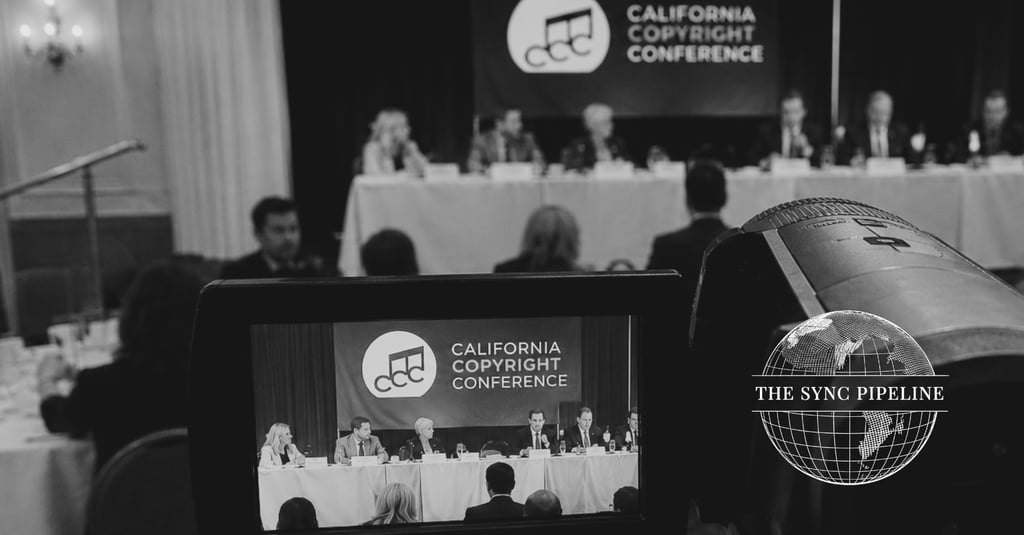
In July 2026, the California Copyright Conference (CCC) gathered the most influential decision-makers from Burbank and New York to address a provocative question: “Is Sync Dead?”. Beyond the shock title, the panel of supervisors and publishers (including veterans from Netflix, Hulu, and ABC) delivered a stark diagnostic: the era of the "miracle placement" that changes a career overnight is over. For The Sync Pipeline, this summit marks the transition from an economy of opportunity to an economy of infrastructural compliance.
Klem Loden
7/24/20262 min read
The “Sync State of the Union”: A Saturation Diagnostic
The intervention by Sherry Orson and her panel of experts, including Peter Davis, Jonathan Finegold, Jonathan Lane, and Amani Smith, highlights a brutal mutation of the audiovisual landscape. In 2026, the synchronization market is under triple pressure: a massive contraction in advertising budgets, unprecedented catalog saturation, and the rise of generative AI as the default solution for low-value-added musical needs. Supervisors are no longer just looking for “great music”; they are seeking to navigate an ocean of content where a track’s visibility now depends on its ability to solve an immediate production problem rather than its artistic brilliance.
The End of the “Golden Ticket” for Independents
For years, the industry oversold synchronization as a “golden ticket” capable of transforming an independent artist into a global star through a single placement. The CCC panel officially buries this narrative. Within our Operational Sync Literacy (OSL) framework, we analyze this shift as a forced professionalization of the sector. The supervisors present, such as Burt Blackarach (Salamani Music), confirm that opportunities have thinned out and that technical requirements, Stems, Metadata DNA, and Clear-Rights, have become the primary selection filter. Success in 2026 no longer rests on the luck of being heard, but on the guarantee of being operationally flawless.
Infrastructure as the Only Shield Against AI
One of the most critical points raised during the summit is the surge of AI music tools. To counter this competition, publishers must transform their catalogs into service infrastructures. Jonathan Lane emphasizes that the modern supervisor now acts as a quality control engineer. If a catalog does not offer instant “emotional legibility” and binary legal documentation, it is systematically discarded in favor of automated solutions. It is not creativity that is under threat, but the administrative efficiency of traditional players who have yet to align their data conduits with 2026 standards.
Sync is Not Dead; It Has Become a System
The message from the California Copyright Conference is clear: synchronization is not dead; it has industrialized. For industry professionals, this “State of the Union” is a call for strategic lucidity. The 2026 pipeline belongs to those who treat their musical assets as highly certified software components. Tomorrow's independence will not be won through the quest for a single placement, but through the ability to sustainably and transparently integrate into the value flows of a market that no longer forgives operational amateurism.