
SXSW London 2026: The Pivot Toward “Transatlantic Sync” and the End of Geographic Borders
The conclusion of the second annual SXSW London this June 6, 2026, marks a strategic turning point for European music exports. Beyond the showcases, the conference sessions revealed a brutal reality: to penetrate the production pipelines of Burbank or Atlanta, artistic talent is no longer enough. The real barrier is no longer the Atlantic Ocean, but structural alignment. This article analyzes how the standardization of metadata according to U.S. norms has become the only true bridge for global, frictionless synchronization.
Klem Loden
6/6/20262 min read

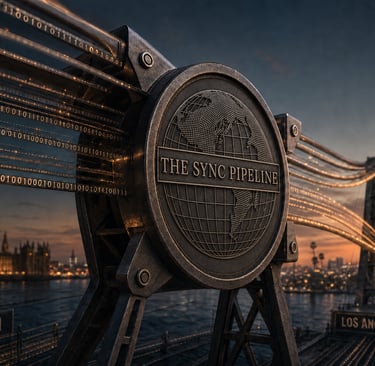
London as a Hub for Regulatory Alignment
The 2026 edition of SXSW London in Shoreditch confirmed that the British capital is no longer just a creative showcase; it is establishing itself as the European laboratory for “Transatlantic Sync.” Debates within panels, particularly during the “Sync 101” sessions, highlighted a persistent friction: the inability of European catalogs to integrate into American workflows due to a lack of proper formatting. For the international music supervisors in attendance, a “great” track without compliant metadata (IPI/ISRC, validated splits, points of contact) is technically invisible to U.S. production pipelines.
Data Standardization: The New Universal Language
The message hammered home during this summit is clear: synchronization has become a market where the barrier to entry is software-based. At The Sync Pipeline, we observe that the pivot toward “Transatlantic Sync” requires a radical mutation of the catalog, beginning with the reality of AI and administrative filtering. Management platforms used in Hollywood now automatically reject files that do not comply with “Clean Rights” protocols, creating an immediate technical wall for non-compliant assets.
This environment has transformed London into a strategic buffer zone where European publishers must undergo a deep structural alignment. This process involves a total "Americanization" of their data architecture, specifically regarding stem precision and emotional metadata tagging, before even attempting to leap into the Los Angeles market. In 2026, the technical documentation of a track is no longer an appendix; it is the primary interface through which the American production ecosystem perceives, evaluates, and ultimately accepts a foreign asset.
Breaking the Burbank Glass Ceiling
Exchanges between supervisors and sync agents in London emphasized that institutional trust relies on technical predictability. A catalog that provides an instant response with flawless legal documentation will always be prioritized over a superior work that is administratively vague. As noted in Billboard Pro analyses surrounding the event, access to the massive budgets of American studios is no longer a matter of public relations, but of data connectivity. The London-LA bridge is now paved with standardized metadata.
Synchronization as a Globalized Market
SXSW London 2026 closes the era of geographic protectionism. In a world where production platforms are interconnected, geography fades behind compliance. For industry professionals, the post-SXSW challenge is simple: adopting American data standards is no longer an option for export; it is the sine qua non of operational survival. In 2026, being “Sync-Ready” in Paris or Berlin means being fluent in the technical language of Burbank.