Rights Architecture: The Music Tech Ouroboros and In-DAW Metadata
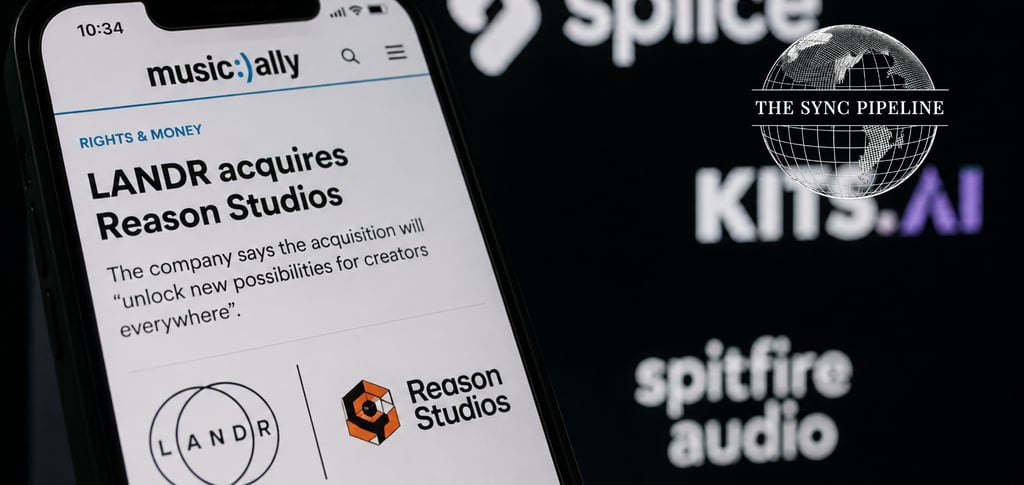
June 2026 marks an unprecedented acceleration of technological self-cannibalization within the music industry. With the successive acquisitions of Reason Studios by LANDR, and both Spitfire Audio and Kits AI by Splice, we are witnessing the definitive unification of the creative tool, the AI engine, and the distribution pipeline. For The Sync Pipeline, this total verticalization signals the end of post-facto standardization: structural compliance and rights identifiers are now being encoded directly into the file at the exact moment of creation.
Klem Loden
6/30/20262 min read
The Unification of the Value Chain: From Tool to Distribution
The merger of production environments (DAWs) and service platforms (Mastering, Distribution, Samples) is creating a closed-loop system, a true industrial Ouroboros. By absorbing Reason, LANDR is acquiring more than just software; it is securing a unique point of entry into the creative workflow of thousands of composers. Similarly, Splice, by integrating the prestige catalog of Spitfire Audio and the vocal technology of Kits AI, now controls both the raw sonic material and its transformation engine. This verticalization effectively eliminates the historical rupture between the act of composing and the act of administration.
In-DAW Metadata: Standardization at the Source
The major infrastructural consequence of these buyouts is the emergence of “In-DAW” metadata. Historically, the structural alignment of a catalog (rights IDs, splits, tags) occurred after production, often manually, creating massive operational bottlenecks. In this new paradigm, synchronization metadata and AI training IDs are injected the moment the composer hits “Record.” The audio file is no longer a passive object but an intelligent asset natively carrying its own “Chain of Title” and licensing permissions.
AI and Consent: Binary Tagging of the Sonic DNA
Splice’s integration of Kits AI highlights another crucial challenge: managing consent for model training. By owning the creative tool, these platforms can certify the provenance of data and ensure binary tagging of assets. For the OSL (Operational Sync Literacy) framework, this means that “Sync-Readiness” is becoming a software feature. A music supervisor will no longer need to audit a catalog manually; they will simply verify the certificate of origin generated natively by the DAW, guaranteeing that every sample and every voice is “Clear-Rights” and compliant with AI compensation protocols.
The End of Post-Production Administration
The music tech Ouroboros is redefining the boundary between creation and management. In 2026, infrastructure is replacing negotiation. The unification executed by LANDR and Splice proves that music’s value is now captured at the source by whoever owns the indexing tool. For publishers and composers, this shift mandates a brutal update: success no longer depends solely on artistic quality, but on the adoption of these vertical pipelines where compliance is the source code of creation.