inMusic Acquires Native Instruments: Towards a Verticalization of Creation
The absorption of Native Instruments (Kontakt, Maschine, Traktor) by industry giant inMusic (Akai, Denon, Moog) in May 2026 marks the completion of a fully verticalized creation infrastructure. By now controlling the entire chain from hardware to software, inMusic is imposing a new industrial paradigm. This article analyzes how this merger could enable the native integration of synchronization metadata directly within virtual instruments, transforming the act of composition into an immediate step of structural compliance.
Klem Loden
5/18/20262 min read
Verticalization: From Instrument to Industrial Component
The acquisition of Native Instruments by inMusic places the Rhode Island-based group in an unprecedented hegemonic position within the global market. This move should not be read as a simple consolidation of technological assets, but as a decisive step toward the total verticalization of music production. By owning the tools upon which the vast majority of synchronization catalogs rely, inMusic is taking control of the pipeline at its very source. In this new landscape, software is no longer a mere sound generator; it is the entry point for an industrial component where every work produced must, by default, meet the velocity and clarity requirements of the international market.
Native Metadata Integration: Sync at the Core of the VST
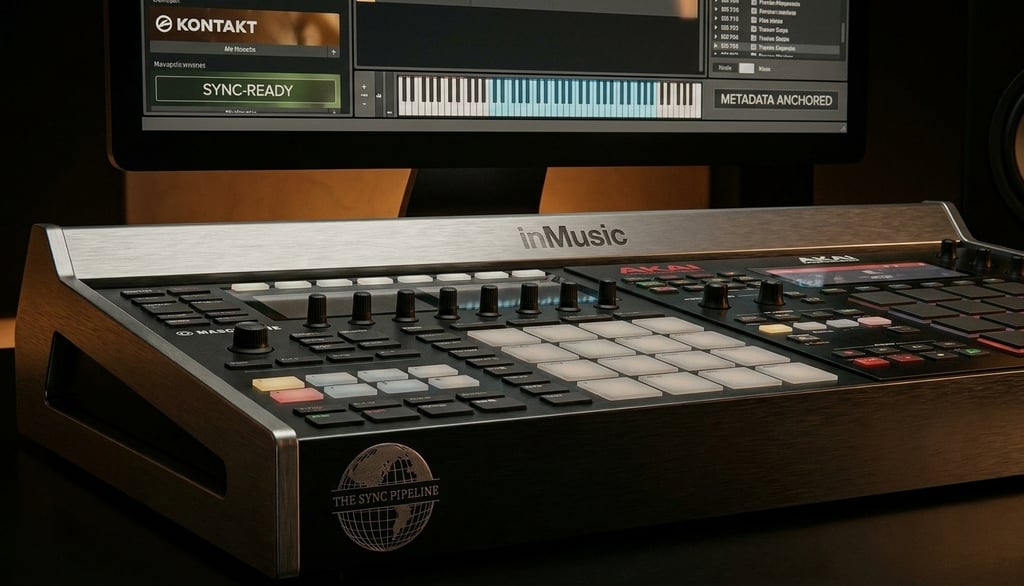
The true strategic revolution of this merger lies in the ability to inject operational literacy directly at the moment of creation. We are entering an era where synchronization metadata, rights shares, and technical specifications could be natively integrated into project files via the Kontakt ecosystem. This embedded "Sync-Readiness" resolves administrative bottlenecks before a track is even exported from the studio. By automating the anchoring of data within the sonic DNA at the virtual instrument level, inMusic is positioned to impose the Clean Rights standard as a universal technical norm, effectively rendering any non-structurally aligned catalog obsolete.
The NKS Ecosystem as a Compliance Standard
The Native Kontrol Standard (NKS) protocol, which already ensures interoperability between hardware and software, becomes the ideal candidate to carry this new layer of industrial data. By extending this standard to rights management and asset architecture, inMusic is transforming its hardware controllers into real-time rights management terminals. For music supervisors, a catalog produced within this verticalized ecosystem offers a superior guarantee of reliability. It marks the end of the isolated audio file era and the beginning of the intelligent asset, capable of communicating its own chain of title and licensing conditions from the very first stage of its design.
The End of the Frontier Between Creation and Management
The verticalization orchestrated by inMusic forces independent publishers and composers into a brutal upgrade of their infrastructure. In 2026, success in synchronization no longer depends on the separation of tasks, but on their technical and administrative fusion. A catalog that is not natively ready for the pipeline becomes an operational debt. This acquisition proves that technological mastery is merely a lever to achieve a broader end: the control of industrial data flow. To survive in this verticalized market, the structural perfection of assets must now be conceived at the source, at the very heart of the creative instruments.
References and Verified Sources:
Music Business Worldwide: Native Instruments acquired by inMusic, owner of Akai and Moog (May 11, 2026)
Native Instruments Blog: An announcement from Nick Williams, CEO of Native Instruments (May 8, 2026)
inMusic Brands Official: inMusic and Native Instruments Unite to Build the Future of Music Creation (May 2026)
Mixonline: inMusic Acquires Native Instruments, iZotope, Plugin Alliance and Brainworx (May 8, 2026)