
Counterfight: When Infraction Detection Transforms Micro-Sync into a Profit Center
On May 28, 2026, at the Music Biz summit in Atlanta, Noah Schäftlmeier, co-founder of Counterfight, unveiled a major technological breakthrough for rights protection. His platform is now capable of scanning all social media networks to identify music usage by businesses operating under the guise of "personal" licenses. For catalog publishers, this pivot marks the advent of Proactive Sync: infringement is no longer just a loss; it becomes an opportunity for direct and automated revenue.
Klem Loden
6/2/20262 min read
Social Scanning: Smoking Out Illegal “Business Sync”
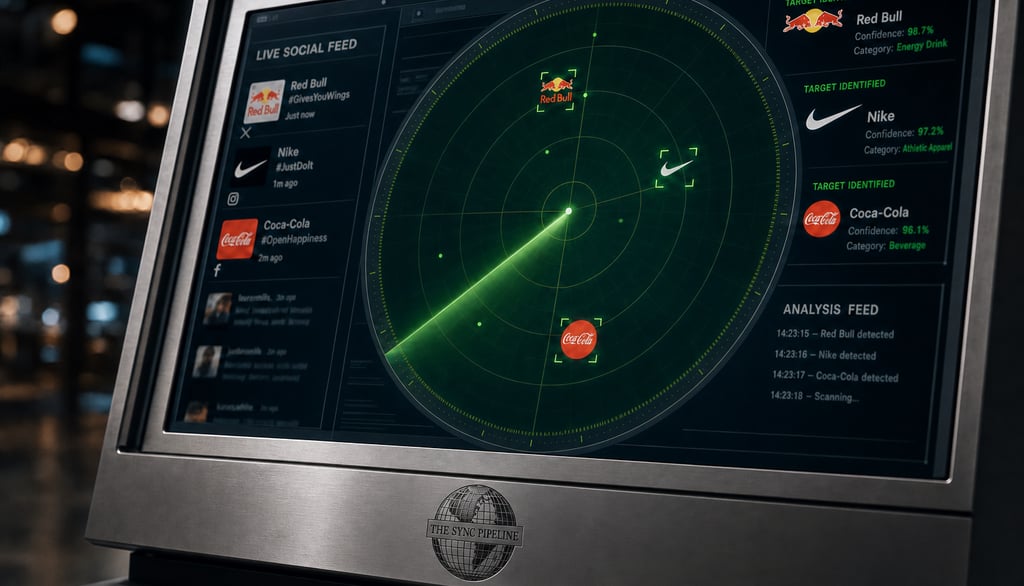
The innovation spearheaded by Counterfight tackles a massive flaw in the digital pipeline: the abusive commercial use of catalogs licensed for the general public. Noah Schäftlmeier was very clear about his technology's mission: “We can tell you which companies are using your music, and then we are going to reach out to them and ask them to pay for it.” By scanning every social platform, Counterfight identifies brand videos that exploit works without having paid for a Commercial Sync License, thereby transforming millions of unmonetized views into enforceable debts for rights holders.
From Passive Monitoring to Active Recovery
Traditionally, rights management on social media relied on content removal (takedowns) or advertising revenue sharing (Content ID). Counterfight’s approach shifts the model toward a direct billing logic. For an independent publisher, this technology changes the nature of the business: it is no longer just about “placing” music, but about regularizing placements that already exist, often created without the catalog's knowledge. This monitoring capability transforms infraction detection into a B2B growth lever, where every corporate video becomes a potential contract to be settled.
A Shield for “Real Music” Against AI
Beyond surveillance, Schäftlmeier positions this tool as a shield for human creators against the rise of generative AI. By focusing on “real music, created with heart,” Counterfight uses artificial intelligence not to create, but to secure value. This distinction is crucial for the structural alignment of catalogs: technology is put at the service of proprietary data sovereignty, ensuring that commercial exploitation by third parties, even involuntary on the part of brands, is systematically traced and remunerated.
Pipeline Reliability as a Profit Engine
The message from Atlanta is unequivocal: in 2026, opacity is no longer an inevitability. The emergence of players like Counterfight proves that a catalog's success depends on its ability to be aggressively monitored. Legal clarity is no longer a passive concept; it is becoming a proactive commercial weapon. For publishers, adopting these detection tools is the ultimate step in Sync-Readiness: ensuring that every second of music broadcast in a commercial context, on any social network, contributes directly to the bottom line.