
ClicknClear vs. Tresóna: The Battle for Micro-Sync Niches Intensifies
On May 25, 2026, a new chapter unfolded in the litigation between specialized licensing leaders ClicknClear and Tresóna Multimedia. ClicknClear filed a motion to dismiss its competitor's amended complaint, denouncing copyright infringement and false advertising allegations as legally baseless. This standoff for control over licensing in high-level sports and performing arts perfectly illustrates why operational clarity in micro-sync has become the industry's new strategic battlefield.
Klem Loden
5/29/20262 min read
The Attack on the License Verification System (LVS)
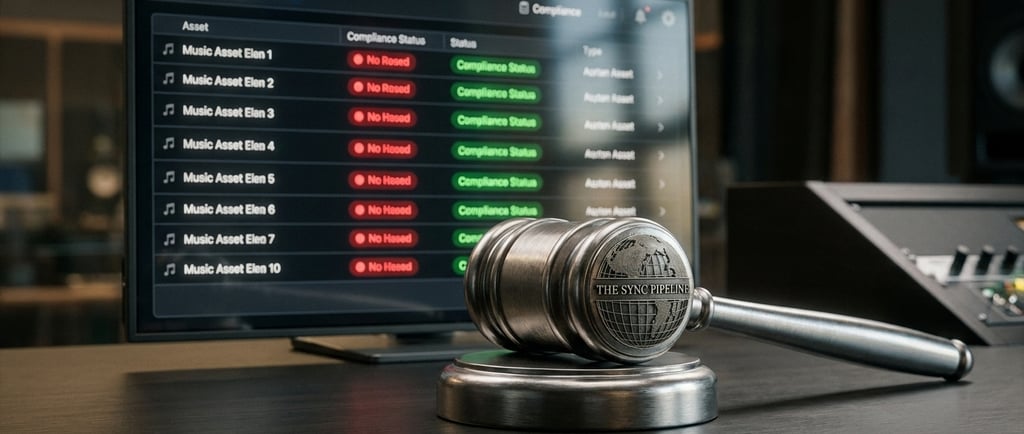
At the heart of this legal development is ClicknClear’s License Verification System (LVS), a technological infrastructure designed to instantly validate the compliance of music licenses used by athletes and federations. Tresóna claims this system constitutes an unfair competition tool, alleging that the LVS systematically rejects its own licenses (marked in "red") to favor ClicknClear’s (marked in "green"). In its motion to dismiss filed on May 22 and enacted on May 25, 2026, ClicknClear countered that LVS results represent a "non-actionable opinion" and a subjective scoring system, rather than a statement of fact that could support a false advertising claim.
Micro-Sync as a Massive Revenue Infrastructure
This dispute transcends a simple rivalry between two agencies. It highlights the colossal value of the micro-sync pipeline within sporting niches (cheerleading, figure skating, gymnastics). As indicated by Loeb & Loeb’s analysis, the courts underscored as early as February 2026 that the question of which rights are necessary to synchronize choreography to music remains a "gray area" of copyright law. For rights holders, this market represents an automated revenue windfall, provided the clearance infrastructure is administratively unassailable. The current fight between ClicknClear and Tresóna is a struggle to define who will serve as the "Customs Officer" for these financial flows.
Impact on International Federations
The conflict is beginning to send operational shockwaves through the industry. In early May 2026, Ice Skating Australia (ISA) abruptly withdrew its new music compliance policy, which would have made the use of ClicknClear mandatory for its members, citing "unforeseen circumstances." This withdrawal illustrates the caution of institutional buyers faced with the legal instability of licensing platforms. For the Industrial Strategist, this proves that Sync Literacy has become the most valuable asset: without indisputable legal certification, even the most advanced distribution technology can be paralyzed by the risk of litigation.
The Sovereignty of Legal Data
The outcome of ClicknClear’s motion to dismiss will set the transparency standards for the entire micro-sync industry. In 2026, the battle is no longer fought over catalog quality, but over the solidity of the proof of clearance. Legal clarity is no longer an accessory to a contract; it is the engine of the pipeline itself. In this high-volume niche market, whoever successfully imposes their verification system as the universal standard will hold the keys to a resilient and highly automated revenue infrastructure.
References and Verified Sources:
ClicknClear Moves to Dismiss Amended Tresóna Lawsuit (May 26, 2026)
Tresona Multimedia, LLC v. Pre-Cleared Limited et al - Docket 1:25-cv-06202 (May 2026 Update)
Tresóna Files Amended ClicknClear False Advertising and Copyright Infringement Lawsuit (April 2026)
False advertising claims in music licensing rivalry dismissed (Case Analysis)