Becoming “AI-Literate”: Education as the Only Operational Safeguard in 2026
At the Music Biz 2026 summit in Atlanta, Patrick Ross, COO of Music Ally, redefined the stakes of the technological transition: artificial intelligence is no longer a creative option, but a literacy imperative. By distinguishing “Good AI” dedicated to data management from “Bad AI” perceived as a creative threat, Ross establishes education as the ultimate weapon for keeping pace. For the synchronization sector, this mastery is becoming the key competency for the supervisors and publishers of tomorrow.
Klem Loden
6/8/20262 min read
Education as a Driver of Industrial Velocity
Patrick Ross’s intervention in Atlanta marks a departure from purely ethical debates over AI. By stating that “understanding AI is crucial for the industry to keep pace with change,” Ross shifts the focus toward operational efficiency. Education is no longer a simple accumulation of knowledge; it is a survival strategy. Music Ally, through its digital marketing certifications and training programs, positions technological literacy as the necessary filter to transform a disruptive technology into a structured growth lever.
Distinguishing Infrastructure from Creation
At the heart of this new literacy lies the ability to separate use cases. “Good AI,” according to the leaders gathered at Music Biz, is the kind that tackles the industry's “plumbing”: data management, rights tracking, and metadata automation. This is where AI becomes an indispensable ally for catalogs. Conversely, “Bad AI”, the kind that threatens the integrity of human creation, must be contained by professionals capable of diagnosing the origin and compliance of assets. This binary distinction between management AI and generative AI is becoming the new standard for due diligence in the synchronization pipeline.
The “AI-Literate” Supervisor: A Strategic Arbiter
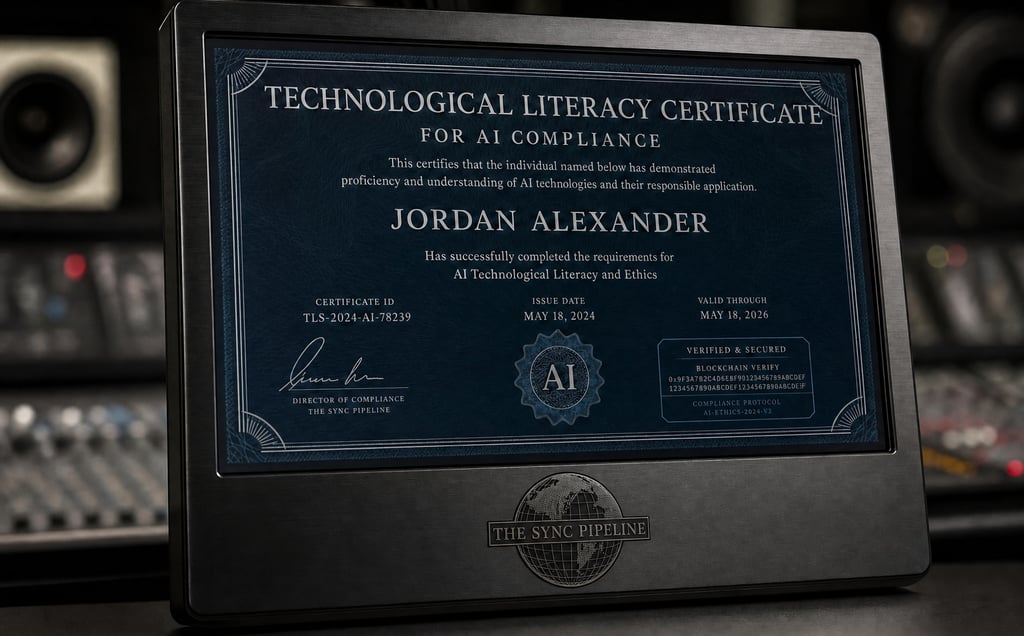
In 2026, the role of the music supervisor and the publisher is evolving into that of a technological arbiter. Being “AI-Literate” means knowing how to navigate an ecosystem where transaction speed is paramount. As Ross points out, the goal is to help the industry “work better and smarter.” For an independent catalog, possessing this literacy is a mark of institutional credibility: it is the guarantee that they know how to use technology to make their metadata reliable without injecting legal risk into the licensing process.
Human Data Driven by Software Expertise
Music Ally’s message is unequivocal: AI will not replace professionals, but professionals trained in AI will replace those who ignore it. Synchronization in 2026 is an industry of administrative precision. Adopting these technological literacy certifications is not a luxury; it is the ultimate step in structural alignment. To survive, rights holders must transform their technological curiosity into a certified administrative skill, thereby ensuring the longevity of human creation in an automated pipeline.