
The Cost of a Bad Stem (and Why No One Tells You)
A bad stem rarely causes a direct problem. It causes silence. This article examines how unreliable stems quietly destroy time, increase technical risk, and erode professional trust, without ever producing feedback, warnings, or explicit rejection.
Klem Loden
2/2/20262 min read
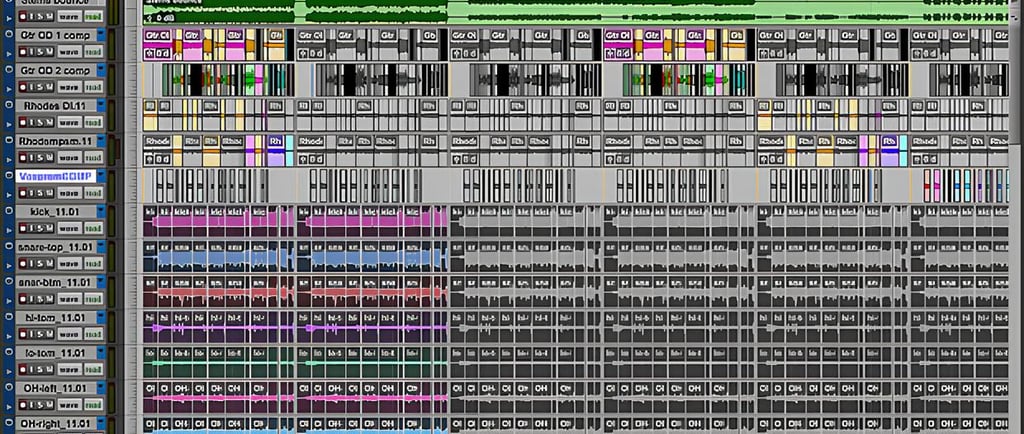
The Cost of a Bad Stem (and Why No One Tells You)
A bad stem almost never triggers a complaint. There is no message, no note, no explanation. No one pauses a production to point it out unless they have no alternative.
What it produces instead is something far more consequential.
The system adapts.
In sync environments, stems are not a courtesy or a technical formality. They are a stress interface between music and post-production. They are judged not on how they sound, but on how they behave when everything around them starts to move.
The first cost of a bad stem is time, although it rarely registers as such. When a stem fails to isolate cleanly, when balances collapse or phase relationships shift, post-production slows down. A task that should take seconds turns into compensation. Compensation turns into interruption. Interruption turns into delay.
That delay is never logged. It simply becomes part of a day that ran longer than planned.
What makes this costly is not the magnitude of the problem, but its timing. Post-production does not operate with spare bandwidth. Every unexpected adjustment forces a trade-off. Something else gets rushed, simplified, or deferred. The stem becomes the source of friction, even if no one names it as such.
Technical risk follows immediately after. A stem that behaves unpredictably introduces uncertainty into the entire downstream chain. Automation no longer feels safe. Revisions become fragile. Late-stage changes carry a higher probability of failure.
The issue is not that something breaks. It is that no one can be certain it will not.
Under deadline pressure, uncertainty is treated as risk. And risk, long before it becomes audible, is quietly avoided.
The most significant cost, however, is reputational, and it is entirely invisible.
No one flags a composer for bad stems. There is no formal penalty, no warning system, no feedback loop. What changes is behavior. Editors remember friction. Mixers remember instability. Safer alternatives get pulled earlier. Riskier ones drift down the list.
From the composer’s perspective, nothing happened.
From the system’s perspective, trust was reduced.
That reduction never announces itself. It appears only as absence.
This is why no one tells you. Explaining a bad stem would require articulation, back-and-forth, revision management, and retesting. Under pressure, that effort rarely makes sense. It is easier to move on than to correct.
Sync pipelines do not fix unreliable assets. They route around them.
Many composers assume stems only need to be technically acceptable. As long as they open, export, and resemble the mix, the requirement feels satisfied. From a pipeline perspective, that assumption is dangerous.
A usable stem is not one that merely exists. It is one that survives abuse. It remains coherent when isolated, reordered, muted, compressed, filtered, or recombined under conditions the composer never anticipated. It behaves as if failure is expected, because in post-production, it is.
Anything less introduces friction. And friction is remembered.
In sync, a bad stem does not trigger rejection.
It triggers avoidance.
Time lost is never reimbursed. Technical risk is never forgiven. Reputation is never officially damaged, but it is quietly recalibrated.
By the time the composer notices the silence, the cost has already been paid.
Sync Publishing LLC — Wyoming, USA
Registered Office: Sheridan, Wyoming
© 2026 Klem Loden — All rights reserved.
All content, programs, and materials are protected under U.S. copyright law.
Professional advisory and structural alignment for global music catalogs and publishers.
Independent consulting — not a placement agency and not a publishing service.