
AI and Metadata Management: The End of the Manual Tagging Era
The massive integration of AI into music discovery in April 2026 marks a tipping point for the industry. Between emotional "Smart Tagging" and the deployment of context-aware advertising by streaming giants, data has become the priority asset. This article analyzes how these technologies are redefining catalog value and why structural alignment now requires intelligent automation.
Klem Loden
4/12/20262 min read

The "Smart Tagging" Paradigm: Beyond Genre
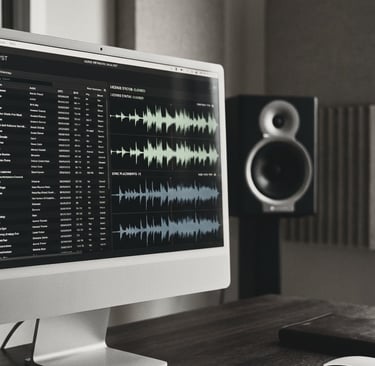
For decades, tagging music catalogs was a manual, tedious, and inherently subjective task. By 2026, this method has become obsolete. Leading music libraries are now integrating AI capable of analyzing melodic curves and harmonic structures to identify complex emotions with surgical precision. We no longer tag a track simply as "Indie Rock"; AI now identifies "bittersweet longing" or "escalating urban tension." For music supervisors, this gain in precision is revolutionary, allowing for a shift from static keyword searches to narrative intent searches, a standard increasingly demanded by the Guild of Music Supervisors to optimize post-production workflows.
Context-Aware Ads: Music as Adaptive Data
The major innovation of this quarter stems from the deployment of "Context-Aware Ads" by Spotify and Netflix. These systems no longer just target users based on past tastes; they adapt the advertisement’s music in real-time based on the user's mood and the immediate content they have just consumed. This technology, extensively documented in recent Spotify Engineering reports, transforms production music into a malleable asset. For a catalog, being "AI-ready" means every track must be segmented and metadata-tagged so it can seamlessly fit into these intelligent advertising flows. Revenue pipelines no longer depend solely on broadcast, but on the algorithmic relevance of the track at any given moment, making structural data the true engine of commercial performance.
The Regulatory Shift: The Synchtank Alert
It is impossible to ignore the legal evolution of this technological landscape. A landmark article published by Synchtank on April 9th highlights a major shift in the UK regarding AI-related copyright, redefining the intrinsic value of production music. If AI can tag, it can also generate, shifting intellectual property protection from "pure creation" toward "structured data." A catalog with rich, precise, and human-verified metadata will always hold higher value in the sync market than a generic library. This "operational literacy" offers a guarantee of legal clarity in a complex technological environment, a point emphasized by Music Business Association analysts to secure investments in catalogs.
The Imperative of Tech Literacy
Artificial intelligence is not a threat to creativity, but it now penalizes operational amateurism. Entities that refuse to adopt automated tagging and contextual data analysis will inevitably find themselves excluded from the new revenue pipelines of streaming platforms. In 2026, owning music is no longer enough; you must own the data that allows AI to find and exploit it. As reminded by recent debates at the California Copyright Conference, the survival of an independent catalog rests on its ability to transform its sonic assets into intelligent digital assets, capable of navigating the automated ecosystem of modern synchronization.
References and Consulted Sources:
Synchtank: AI, Copyright and the Future of Production Music (April 9, 2026)
Spotify Engineering: Real-time Contextual Audio Targeting Systems Report
Guild of Music Supervisors (GMS): Metadata Standards for AI-Assisted Discovery
Music Business Association (Music Biz): The Evolution of Digital Asset Valuation 2026
California Copyright Conference: Metadata as Intellectual Property Framework