
A Missing Layer in Music Education
Music education has evolved enormously over the past decades. Yet a structural dimension of the modern music industry is still rarely taught in a systematic way: how music actually moves through licensing pipelines such as sync. More and more professionals now believe that this knowledge should be part of formal education.
Klem Loden
3/14/20262 min read
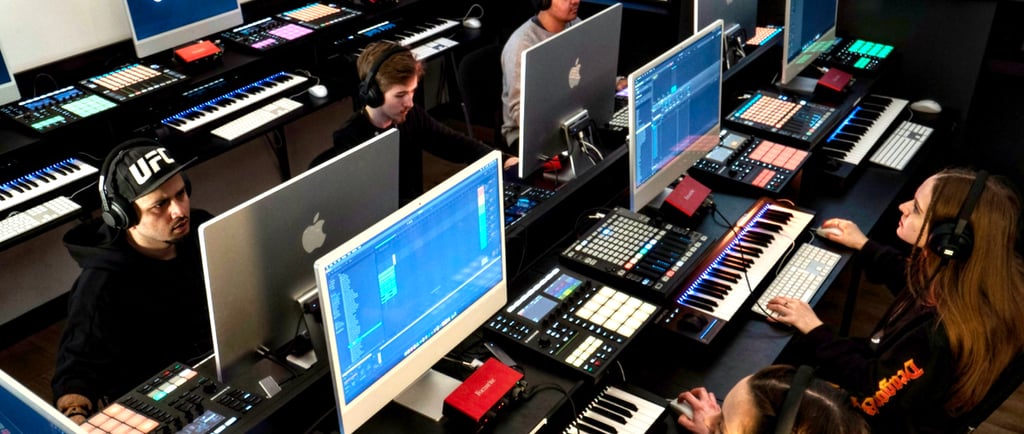
Music education has never been richer than it is today. Students can study composition, orchestration, production, scoring, music technology, entrepreneurship, music business, copyright law, and many other dimensions of the profession. The best institutions understand that the modern musician must navigate not only an artistic world, but also a complex professional ecosystem. Yet one essential layer of that ecosystem remains largely absent from structured curricula.
The global sync market has become one of the most active economic engines of the music industry. Films, television, advertising, trailers, video games, and digital platforms use music constantly. Entire catalogs are built around licensing strategies. Publishers, supervisors, and editorial teams make decisions in environments shaped by strong operational constraints.
Despite this reality, the concrete mechanisms that determine how music moves through these pipelines are rarely taught within a structured academic framework. Most composers only discover these mechanisms after several years in the industry.
Over the past few years, I have worked with many composers who share the same experience. Many enter the profession with strong musical training but very little understanding of how licensing ecosystems actually function. They often spend years trying to understand why certain tracks circulate easily while others never move at all, even when the music itself is solid. What is missing is not musical ability. What is missing is operational understanding of the industry.
Understanding catalog architecture, rights structuring, metadata strategies, delivery standards, licensing logic, and the internal decision mechanisms of sync pipelines fundamentally changes the way music is composed, organized, and positioned.
This realization led me to develop a teaching program specifically dedicated to these structural dimensions of the industry. The goal is not to replace composition training, but to complement it by giving musicians the tools needed to understand the systems their music will eventually enter.
Over time, I developed several educational initiatives around this approach. This has taken the form of educational programs, mentoring initiatives for composers who want to understand the real mechanics of sync, as well as a professional publication dedicated to analyzing industry pipelines: The Sync Pipeline.
Recently, this work has begun to attract the attention of professionals connected to major music education institutions. Discussions are currently underway with some of them to explore the possibility of introducing this type of approach into a formal academic framework. These conversations are still exploratory, and no official program has been announced at this stage. But the mere fact that these conversations are happening is already revealing.
Many experienced professionals now recognize that the industry has evolved faster than the educational structures meant to prepare musicians for it. As sync continues to expand globally, understanding its operational framework could become an essential skill for the next generation of composers and producers.
If initiatives like this move forward, students will not only learn how to write music for picture. They will also learn how that music actually travels through the industry once it leaves the studio.
In an industry structured by complex pipelines, rights architectures, and fast decision cycles, that understanding could become almost as important as the music itself. And in the long run, integrating that perspective into music education could open a new chapter in how the profession is taught.